
46: High visibility
Burning my face, meeting lambs, and donating to the Food Bank For NYC

My week
Here’s a cooking story: Last week, I was making pasta, and I threw a quarter cup of boiling water into my own face.
I have always had poor hand-eye coordination.
As I sat in the ER, waiting to be transferred to a hospital with a burn unit (a burn unit), I was almost cheerful. My vision was unaffected. My pain was tolerable. The doctors and nurses were being nice to me. My friend Atticus was sitting patiently in the waiting room, my friend Cheryl was at home making blondies for when I got back, and my boyfriend was driving from upstate to be there with me. I felt extremely lucky.
The only problem was aesthetics.
My face looked radically different than it had before. For all I knew, it could be a permanent change.
I have never been a girl who fantasizes about her wedding day, but I had an unexpected vision of myself in a beautiful white dress, standing beneath a flowered arch, with a giant, weeping, peeling, purple burn across my face. Tears sprang to my eyes.


In the hallway, I could hear the doctors and nurses talking about my burn, debating its severity. Superficial, or partial thickness? Transfer, or discharge? They walked casually past my room, whose door was ajar, and threw appraising glances at me as if I wouldn’t notice.
I wasn’t the only patient receiving such special treatment, such interest. There was also a patient with leprosy.
Leprosy, or Hansen’s Disease, is actually completely curable and not highly contagious. It has deep, outdated, historical stigma attached to it. Most people think of leper colonies, we think of devastation. Our impulse is “get away!” In fact, it is very unlikely to contract leprosy from an infected person. From the CDC: “Leprosy does not spread easily between people. You must have prolonged, close contact with someone with untreated leprosy over many months to catch the disease.” Disease transmission stops when treatment begins.
The stigma surrounding leprosy is a barrier to treatment. It sounds so permanent, so hopeless. People don’t stick to their treatment plans. People don’t seek help in the first place.
Suddenly, as I listened to the doctors gossiping, I was in a league with leprosy. They talked about my burn in the exact same hushed tone, reserved for us two special patients. The severity of our problems was different, certainly. My burn healed in a week, whereas Hansen’s Disease requires one to two years of medication. But in both cases, all the danger was superficial. Mild, but visible.
As I went through my daily life for the next few days, I became conscious of a new way of being. When I walked around my neighborhood, I could feel people looking at me. The cashier at the grocery store asked me what happened. A little girl riding her scooter came to a dead halt when she saw me. She stared at me in open wonder, open horror. Her head turned as I walked past.
I don’t think it’s unkindness that makes people stare. I think it’s human nature. It’s easy to forget that we are animals, but we are. We still have survival instincts. When someone has a noticeable mark on them, we can’t help but analyze it. Is it dangerous? Infectious? A warning? This calculus lives so deep beneath the surface of our consciousness that we don’t even realize it’s happening. It just feels like a tug of our eyes, an irresistible, embarrassed curiosity.
Thanks to the burn, I was in a tenuous, momentary alliance with all the visibly invisible people in the city. Just like the huddled figures on park benches or the shouting men in subway stations, I was noticed, appraised, evaluated for risk. I saw people look involuntarily toward me, then decide to look away.
I didn’t mind being the subject of that attention, actually. I found it mostly novel and kind of funny. But I also knew I was likely a temporary recipient. For so many people, I realized, this was a constant way of life, the only way they could meet the world.
I felt more acutely than ever the way my gaze slides over and snags on the people around me. The people I ignore, the people I can’t help but watch.
When I first moved to New York City, I was surprised at how difficult it was to interact with homeless people, how cruel it made me feel. I rejected so many people every day. “No, I can’t spare a dollar.” “No, I don’t want to buy a candy bar.” “No, I don’t have any extra food to offer you.” At first, I tried to acknowledge each person who approached me, to connect with them on a human level, at least, if I couldn’t help them. But soon, I found myself detached, impatient. People would speak to me, and I would walk straight past them. I disliked this numbness in myself, but I didn’t do much to fight it. I didn’t smile at anyone or give anyone money. “The best way to help is to donate to charity,” I told myself, and then I didn’t donate to charity.
Once, a young man came up to me in a deli and asked if I would buy him something to eat. I was in the act of purchasing a $7 cookie for myself. “Sure,” I said, uncharacteristically. “I’ll buy you a bagel.”
As I waited to pay, the young man asked, “What’s your name?”
I was suddenly wary. I considered lying, but I couldn’t think of anything but the truth. “Sylvie,” I said.
“Do you live around here?”
“No,” I said.
“What are you doing here?”
“Working,” I said.
“Working? Don’t you ever have any fun?”
“No,” I said.
“Do you want to?”
“No,” I said.
I paid for his bagel and left, feeling very annoyed. No good deed goes unpunished, I thought.
A few days later, when I was at work, two women settled down at the bar, right by my host podium. They were visiting from Los Angeles, I heard them saying, and they bemoaned the city’s homelessness problem. I’m from Los Angeles, too, and homelessness certainly is a serious issue there. LA has the highest unsheltered homeless population in the US, with nearly 70,000 individuals, only 23,000 of whom are sheltered. Around 3,300 young people experience homelessness on a given night in LA.
“It’s because of the weather,” one woman said. “They can survive out there.”
“And they can get food anywhere,” the other woman supplied. She was drinking a $25 cocktail. “The government gives them money, and they can get food anywhere.”
“They’re rich!” her friend agreed. She was also drinking a $25 cocktail. “When they ask for money…” She mimed sticking a finger down her throat, retching. “I’m throwing up. This is me throwing up.”
“Of course they’re rich,” said the other woman. “We’d all be rich if we didn’t have to pay rent.”
Their conversation upset me for weeks. In the moment, I came dangerously close to cussing them out. Not that I have any great leg to stand on. In the past year, I have contributed one bagel and maybe five dollars to New York City’s homeless population. And that begrudgingly. I avert my eyes, I quicken my step, in extreme cases I cross the street. But at least I’m not heartless, I thought. At least I haven’t concocted some bizarre narrative where, somehow, I am the victim, because I have to exist in proximity to another person’s pain. These two women, I felt with deep conviction, were evil.
Or maybe it’s just a failure to see. Maybe they encounter so much suffering they’ve forgotten what it means. Maybe they have to explain it away to themselves. Maybe that’s what evil is.
This was a rough winter for New York. We had a few massive blizzards, which ranged from inconvenient to whimsically delightful for most New Yorkers, but they were extremely dangerous for the city’s unhoused population. In a late January storm, 13 homeless people died from exposure.
I was making my way home from work during that deadly storm, and there was a young man sprawled out across a bench in the mostly-empty train car. I thought about switching cars, then thought better. He was just trying to get some sleep.
Throughout the ride, my eyes kept flickering back to him, despite my best efforts. Was he a threat? Clearly not. But I couldn’t stop looking. He was wrapped in a beat-down puffer coat, shivering violently. He held a vape and a Bic lighter to his chest, but his hands shook so intensely that he kept dropping them. When he reached down to pick them back up, his jacket came open a little, and I saw that he was shirtless underneath it, his torso skinny and pale. Finally, miraculously, he settled into sleep. His eyebrows pulled together into a mildly concerned expression. A person’s sleeping face is so intimate.
My stop came at last. It was almost at the end of the line, and I absently wondered where this young man would get off, worried that he might miss his stop.
Of course, I rebuked myself, as I stepped off the train, as the doors closed behind me, he didn’t have a stop. It didn’t matter where he got off. He would stay on the train as long as he possibly could. That was all he had.
For those of you worried about my face, I’m happy to report that the burn is almost completely undetectable now. I look pretty much normal. I have to be mindful of sun exposure for the next year, but that’s it. The doctors at the burn unit said they’d hardly ever seen a burn heal so well.
As I wrote this piece, I really saw my own hypocrisy and complacency when it comes to my unhoused neighbors. I decided to make a donation to the Food Bank For NYC and to Covenant House. If you feel any of the same feelings I feel, consider looking into food banks and non profits near you.
What I made
It’s been a while since I shared any food on here, but here are some brief highlights from the past few months!
Easy noodle soup:
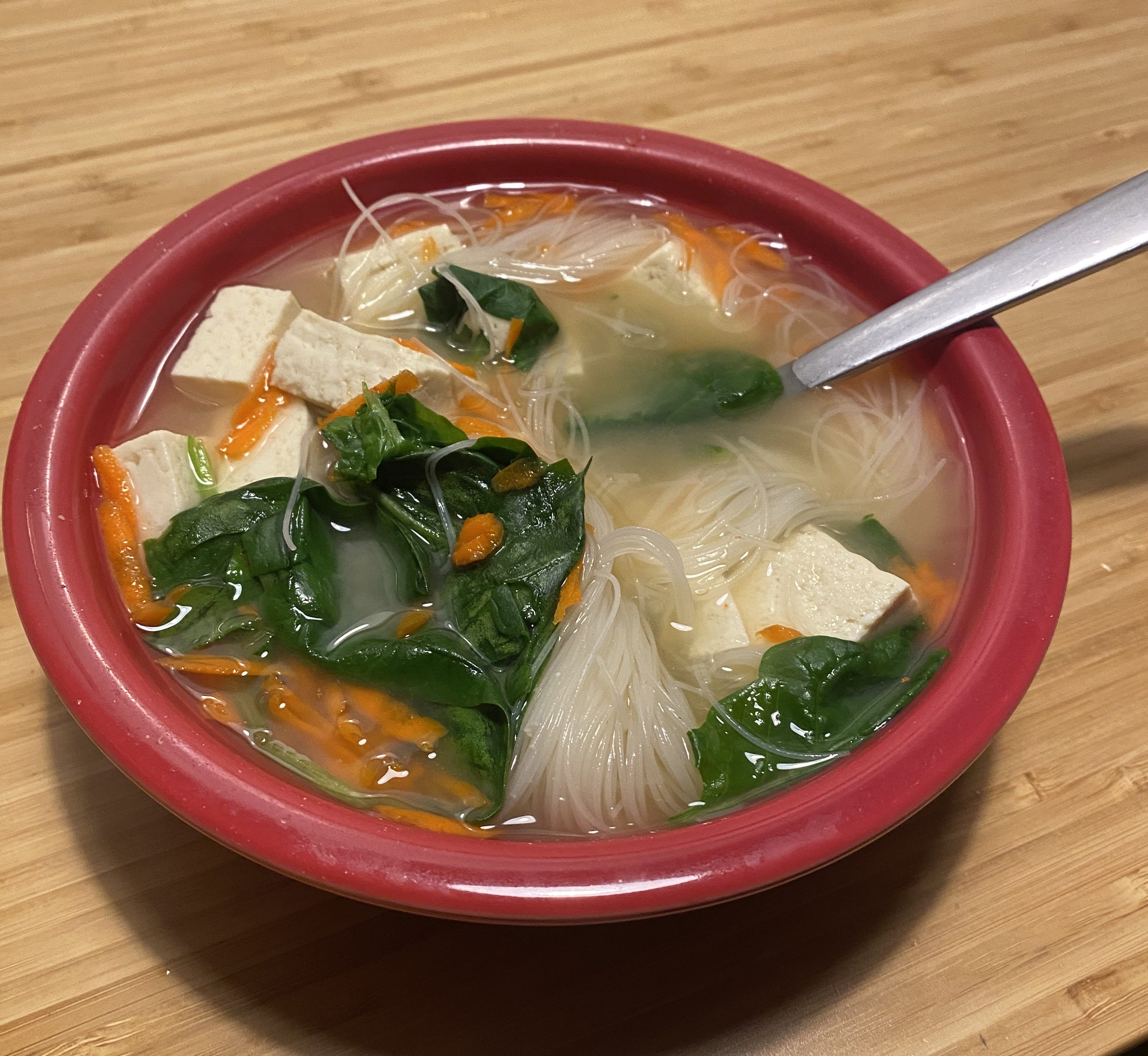
I’ve been enjoying this really easy soup, where you just chop a bunch of veggies and tofu, throw some rice vermicelli in there, and pour boiling water on top. Miso and dashi. Couldn’t be easier or yummier.
Stewy beans:
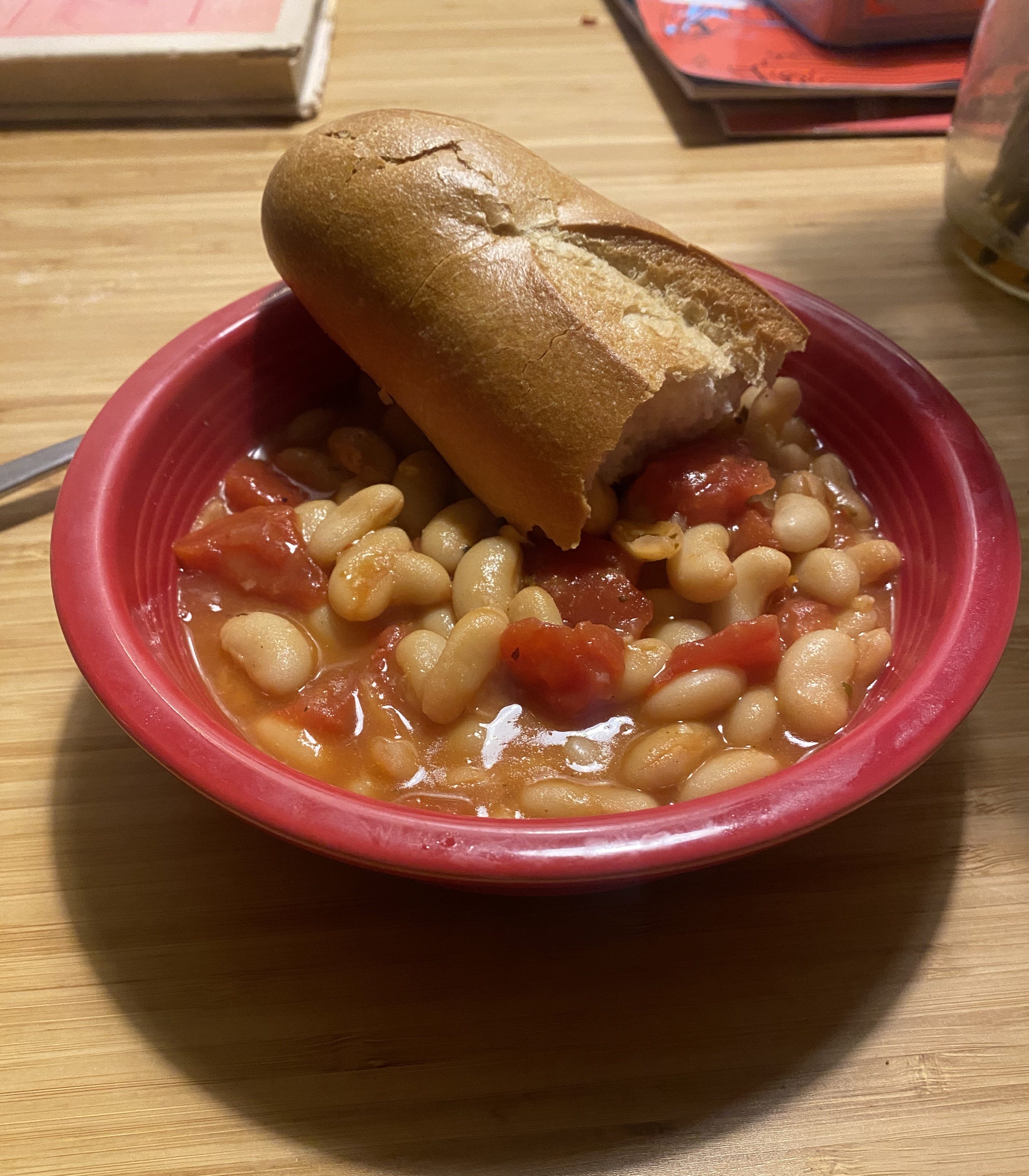
Instead of making white bean soup, I’ve been keeping it thick and stewy. You get more bean for your buck. I love it.
Avocado matzo:
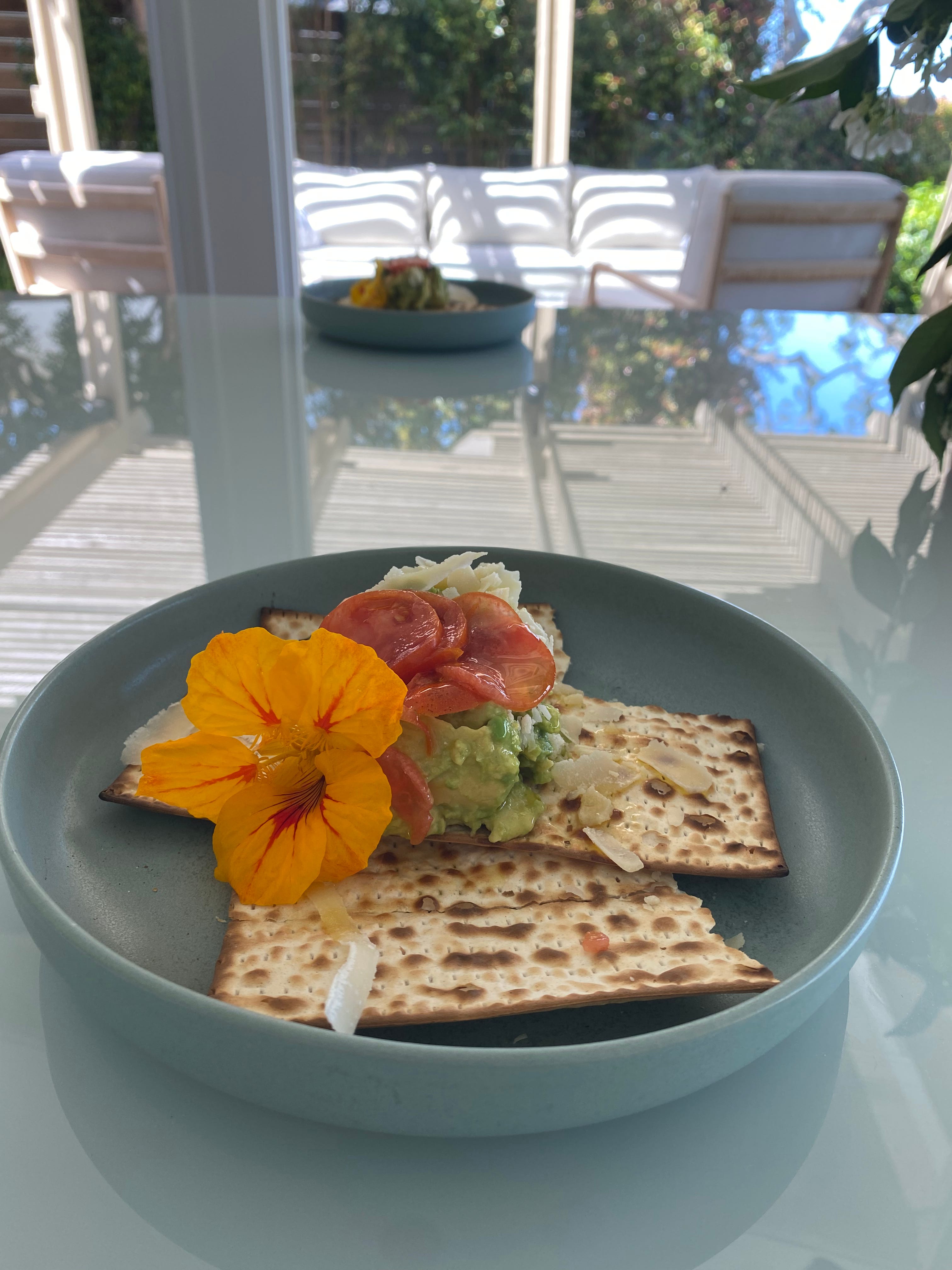
I went home for Passover (I’m so behind on my posts 🥲) and ate so much yummy food. My mom made the craziest, most delicious chocolate pavlova the world has ever known. I ate matzo ball soup until it filled my entire bloodstream. But the prettiest picture I got was of this avocado matzo that my stepmom made, complete with edible flowers from the garden. This was my first time visiting my dad’s new house, and it was a delight.
Peanutty stir fry:
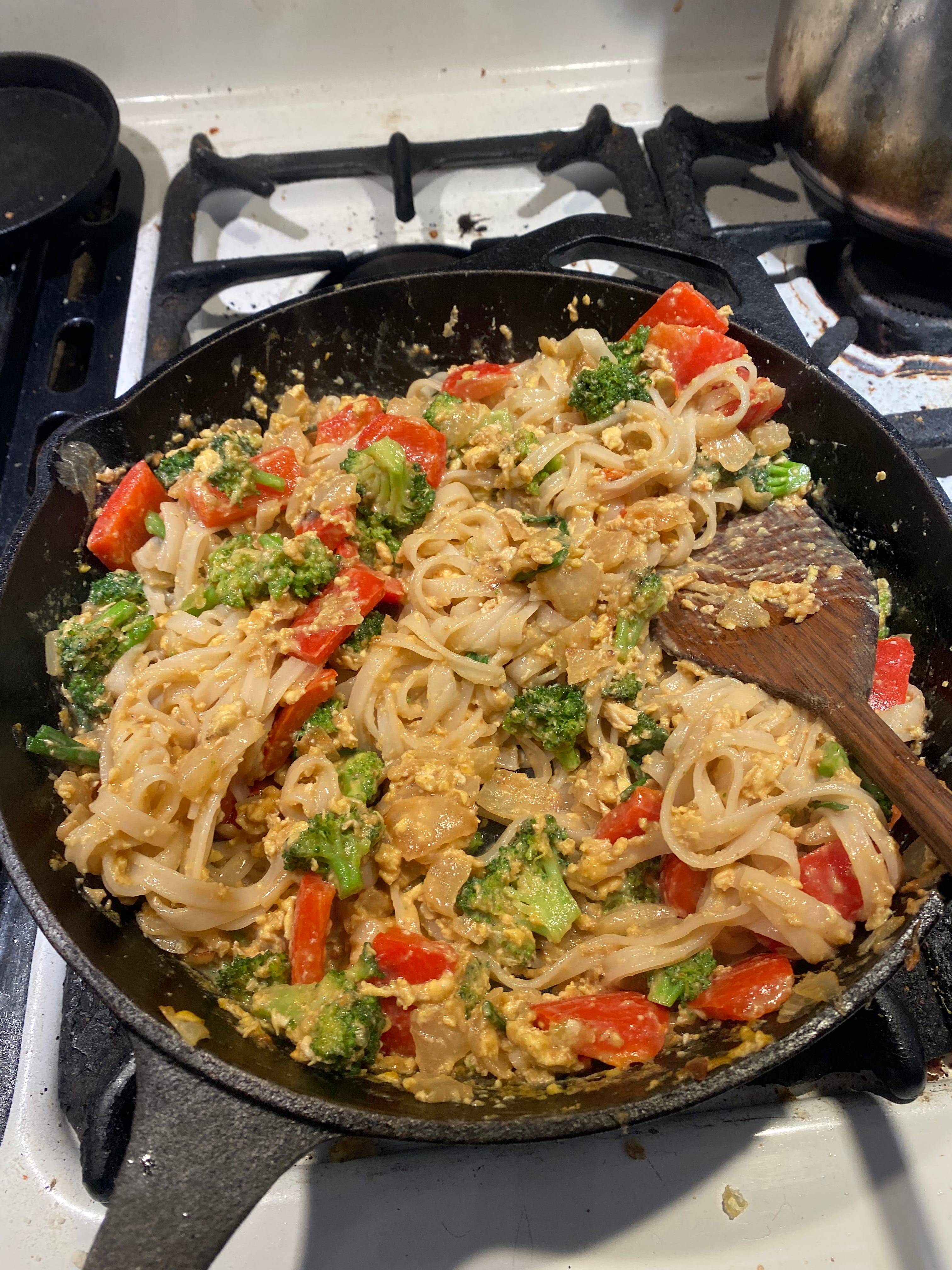
My boyfriend and I made this peanut butter stir fry with eggs and broccoli and peppers and rice noodles and green onions that grow wild in his yard. There’s no feeling like harvesting food straight from the ground and then cooking with it. Yummy business over here.
What I learned


My boyfriend and I befriended this lamb and gave it a fashionable hat.
I’m still figuring out how this newsletter will look moving forward and, obviously, I’m having trouble falling into a consistent schedule. Once a week is not sustainable for me at this point, but I don’t want to keep going a month+ between posts. I’ll dial it in. Thanks for your patience.
I'm impressed you made noodles again.
Glad that it has healed properly. DON’T do that again.